

Forest First Fridays: A Nature-Based Recovery and Wellness Program
Offered first Fridays of the month, February through December
Join BEEC and Turning Point of Windham County for a series of programs blending outdoor skills and peer connection in support of resilience and recovery.
This series will offer individuals the chance to gather monthly on BEEC’s campus for guided sessions that blend outdoor skills, nature exploration, and peer support. Through hands-on activities and shared experiences in nature, this program fosters resilience, connection, and healthy habits.
- 2/6; 2pm-4pm: Fire Building, cooking, birding, and animal tracking
- 3/6; 2pm-4pm: Outdoor Recovery
- 4/3; 2pm-4pm: Outdoor Recovery
- 5/1; 2pm-4pm: Outdoor Recovery
- 6/5; 2pm-4pm: Plant and animal identification, outdoor first aid
- 7/10; 4:30pm-6:30pm: Outdoor Recovery
- 8/7; 4:30pm-6:30pm: Outdoor Recovery
- 9/4; 2pm-4pm: Invasives removal and trail building
- 10/2; 2pm-4pm: Outdoor Recovery
- 11/6; 2pm-4pm: Outdoor Recovery
- 12/4; 2pm-4pm: Shelter Building and backpacking essentials
Turning Point of Windham County (TPWC) is a local recovery center located in downtown Brattleboro. TPWC's core mission is to support and improve the lives of our neighbors who are experiencing substance use and addiction, at any stage of their recovery. They do this through peer-led social connection, community education, counseling groups, recovery support, outreach, and advocacy.
Mud Season Speaker Series: Climate Resiliency in a Changing World
In Partnership and taking place at the Brooks Memorial Library
Monday, 2/9 from 6:30-8pm
Monday, 3/9 from 6:30-8pm
Monday, 3/30 from 7-8pm
Monday, 4/13 from 6:30-8pm
Free and Open to the Public
BEEC and the Brooks Memorial Library invite you to a series of programs based on the Vermont Reads 2025-26 selection, The Light Pirate. The themes of the book and our program series are climate resilience through community and the unstoppable power of the natural world.

Pumpkin & Pye: How Beavers Keep us Cool
A lecture by Patti Smith
Monday, 2/9 from 6:30-8pm
Free event
Pumpkin was born in a stone culvert under Upper Dummerston Road and orphaned when his mother was hit by a car. Pye was attacked and badly injured by a dog as a yearling. BEEC naturalist Patti Smith will tell how these young beavers came together and into her care. Photos and videos will illustrate the many adventures that ensued. Patti will discuss beavers' crucial role in holding water on a warming planet and mitigating floods. Learn how communities are solving beaver conflicts in ways that allow beavers to keep us cool.
Patti Smith has been studying a beaver colony since 2008 and has been rehabilitating injured and orphaned mammals almost as long. Her observations of wildlife inspire her columns in the Brattleboro Reformer and her book, The Beavers of Popples Pond.

Thirty-Eight: The Hurricane That Transformed New England
A Lecture by Stephen Long
Monday, 3/9 from 6:30-8pm
Free event
A hurricane will never surprise us again. But that’s what happened to the people of New England on September 21, 1938. Without any warning, the most destructive weather event ever to hit the Northeast pummeled the coast and blasted its way to Vermont and New Hampshire with torrential rain, flooding, and sustained winds over 100 miles per hour.
Stephen Long tells the story of New England’s Katrina, focusing on the devastation to the region’s forests and the daunting challenge facing New Englanders still in the throes of the Great Depression. His presentation is richly illustrated with archival photos of storm damage and the unprecedented recovery operation, making the storm and its aftermath come alive. A journalist and co-founder of Northern Woodlands magazine, Stephen Long is the author of Thirty-Eight: The Hurricane that Transformed New England.
For more than 30 years, Long has been exploring and writing about New England’s forests. Learning from experts in various forest-relatedBlack and white headshot of Stephen Long wearing a black sweater and white collared shirt. disciplines, he jumped into forest stewardship with the zeal of the newly converted. Before long, he was so taken with the world of forestry, conservation, and wildlife that he and a forester friend started a magazine called Northern Woodlands. Spending time with loggers, birders, other landowners, foresters, hunters, and botanists, he saw the common vision shared by all: this forest has tremendous value, both economic and ecological, and we should do everything we can to keep it intact.
After 17 years at the helm of Northern Woodlands, he was longing to bring his full attention back to his own writing. After leaving the magazine he founded, Long was awarded a Bullard Fellowship at Harvard Forest in 2011. In his fellowship year, he began research on the 1938 hurricane, New England’s most devastating weather event. His own forest in Corinth had been blown down in 1938, a fate shared by Harvard Forest and by 30,000 families. His book, Thirty-Eight, tells the story of how the people and forests recovered from this cataclysmic event. As with all of his work, Thirty-Eight attempts to shed further light on the age-old theme of man’s place in nature.

Salamander Crossing Brigade and Training
by Patti Smith
Monday, 3/30 from 7-8pm
Free event
As our planet heats up and nature is lost to development, amphibians are among the most vulnerable lifeforms. A group of important amphibians in our region depends upon temporary ponds—vernal pools—for egg-laying. These waterbodies can dry up much too fast in drought years, resulting in reproductive failure for these species. These salamanders and frogs are also vulnerable when they must cross roads to reach their breeding habitat. You can help! Join a Salamander Crossing Brigade. Getting adult amphibians safely across roads is a big way we can make their populations more resilient.
The Bonnyvale Environmental Education Center has been organizing crossing brigades at known crossing sites for decades. Come to the library to learn more about the amazing amphibians that head for vernal pools in the spring and what you can do to help them.
BEEC naturalist Patti Smith has been helping frogs and salamanders get across roads for 25 years. She has also helped organize volunteers to document species for the Vermont Reptile and Amphibian Atlas Project. Her favorite amphibian is the gray treefrog.


Vermont Reads Book Discussion: The Light Pirate by Lily Brooks-Dalton
By Rachael Cohen
Monday, 4/13 from 6:30-8pm
Free Event
Join us for a thoughtful, guided conversation centered on The Light Pirate, a novel that follows one girl’s life as climate change reshapes Florida’s coast—and the meaning of home, resilience, and community. This 90-minute facilitated discussion creates space to reflect together on the book’s themes, characters, and emotional impact, while connecting the story to our own experiences and concerns about a changing world.
Participants will explore themes such as climate adaptation, loss and belonging, intergenerational wisdom, and how people respond—individually and collectively—to environmental change. No prior discussion experience is needed; all readers are welcome, whether the book moved you deeply or left you with lingering questions. Come prepared to listen, reflect, and engage in a meaningful exchange inspired by this powerful and timely novel.
Rachael Cohen has been a freelance editor specializing in environmental and regional studies, a teacher of writing, literature, and natural history, a caller of contra dances, and a farm hand. She has a Bachelor of Arts in English from Cornell University and a Master of Science in Environmental Education from the Audubon Expedition Institute/Lesley University. When she’s not teaching for the University of Michigan’s New England Literature Program, held each spring at a camp in New Hampshire, she’s a caretaker in southern Vermont.
Ethnobotany Series: Botany and the Body
In Partnership with Dr. Jessica Dolan
3/21 from 3-5pm
9/12, and 11/7 from 2-4pm
$55 members/$65 non-members per workshop
This three-part, seasonal workshop series with Dr. Jessica Dolan will explore how plants and trees support physical, emotional, and spiritual well-being.
Through hands-on projects, plant identification walks, and practical herbal preparations, participants will learn to care for skin, build a home first-aid toolkit, and cultivate emotional resilience through connection with the land.
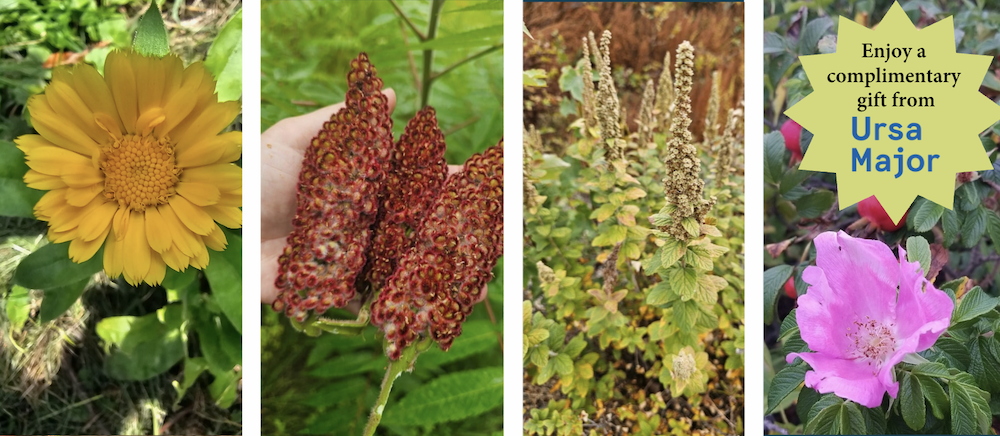
Additionally, each workshop participant will receive a complimentary face serum or body scrub from Ursa Major!
In the first session of the Botany and the Body series, we’ll explore how plants and trees can help care for our largest sensory organ—our skin!
Participants will learn techniques to enhance circulation, hydration, and overall skin wellness, including facial steams and washes, healing baths, foot soaks, rosewaters, hair and skin oils, and skin brushing.
Featured plants may include witch hazel, elderflower, cedar, rose, horse chestnut, calendula, chamomile, rose, balsam fir, marshmallow, meadowsweet, sunflower, flax, evening primrose, nettles, black willow, hickory, birch, wintergreen, and horsetail. Attendees will also create and take home their own healing cedar-rose bath soak sachets.
In the second workshop in our Botany and the Body series, we'll explore local plants and trees that can be used for first aid, including poultices, salves, oils, and rapid hydrators. Participants will explore the BEEC loop to identify these plants in their natural environment, then return to create a handcrafted salve, choosing between Saint John’s Wort or Plantain.
Plants featured in this workshop may include Saint John’s Wort, yarrow, plantain, mullein, spruce, balsam or pine pitch, licorice, nettles, peppermint, sumac, jewelweed, oregano, rosemary, elderberries, chaga, bee balm, comfrey, aloe vera, thyme, elecampane, dock, slippery elm, clove, white willow, ginger, cayenne, burdock, and dandelion.
In the third and final workshop in our Botany and the Body series, we'll explore how to nurture the emotional body through connection with the land. Participants explore practices for grieving and healing with the support of plants, trees, and the surrounding landscape. Deciduous and evergreen trees offer guidance and comfort, while seasonal flowers, seeds, berries, and cones can be gathered to create art that nourishes emotional and spiritual well-being.
The session includes a plant identification and ethnobotany walk, highlighting plants and trees traditionally associated with the heart and emotional healing, such as hawthorn, rose, pine, linden, and catnip. Attendees will collect needles, cones, and berries to craft solstice beeswax candles, integrating the natural materials into a meaningful practice of reflection and care.
Dr. Jessica Dolan is an environmental anthropologist and ethnobotanist, who has worked with Indigenous communities and environmental caretakers in the Northeast, as a researcher, writer, and on Indigenous history, land stewardship, food sovereignty, and cultural regeneration projects, for the last 20 years. She currently works at the National Park Service Northeast Region, Native American Affairs, and is writing an ethnobotany field guide. Her daily work involves writing, creating interpretive resources, and planning/teaching environmental stewardship education, across the Northeast. She is a loving parent to a third generation Brattleboro kid.